ON MIRRORS / TESTAMENTS
27/09/2024
Künstlerhaus Bethanien
Kottbusser Str.
Reflecting with Takashi Arai: Hiroshima, Nagasaki and Palestine
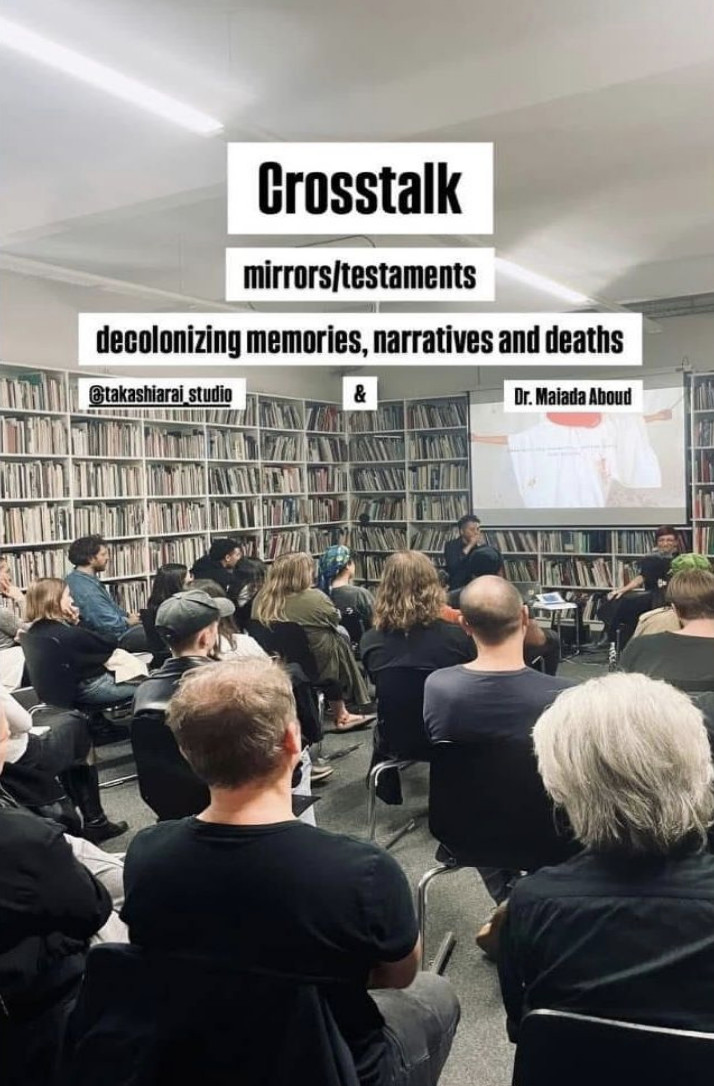
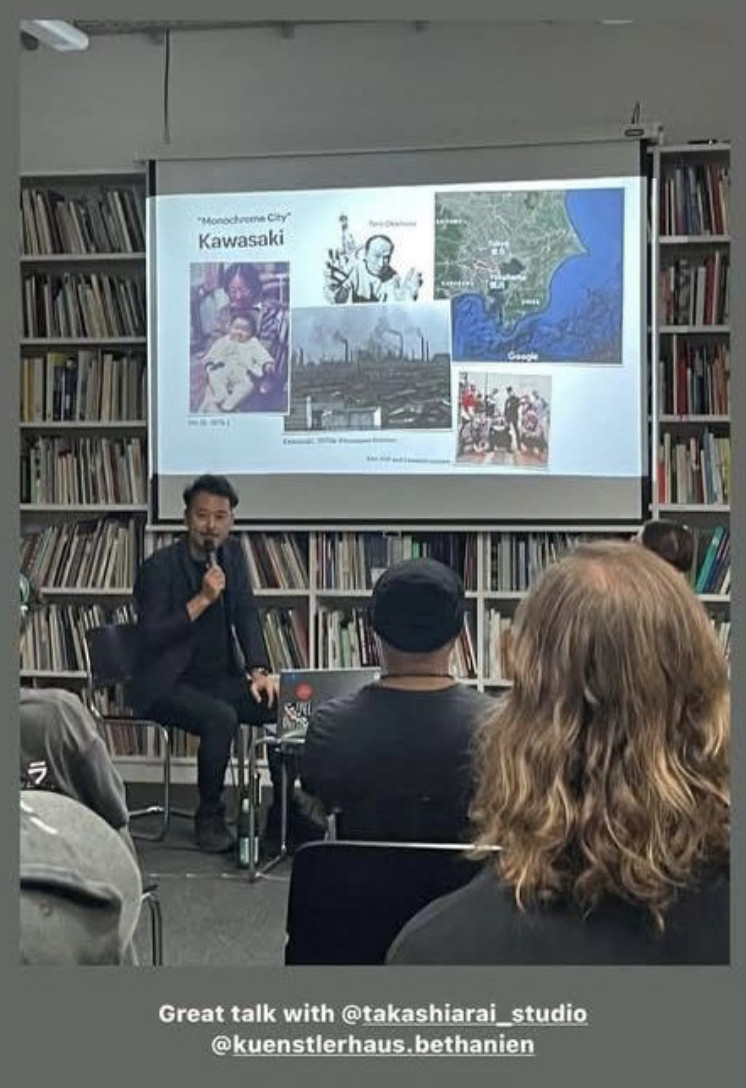
At Künstlerhaus Bethanien, Japanese artist Takashi Arai invited Maiada Aboud to take part in a lecture and reflection connected to his exhibition mirrors/testaments. Arai’s work uses the daguerreotype, one of the earliest photographic processes, to create images that are not only portraits, but encounters with memory, death, survival and testimony. Through long exposure, stillness and the mirrored surface of the image, his work asks the viewer to remain with the presence of another person, rather than consume their suffering from a distance.
Arai’s practice is deeply connected to histories of catastrophe, especially the memory of Hiroshima and Nagasaki. His images do not treat trauma as something finished or safely contained in the past. Instead, they reveal how destruction continues to live through bodies, voices, landscapes and descendants. The photographic image becomes a witness: fragile, reflective and impossible to separate from the person who looks at it. In mirrors/testaments, Arai worked with Palestinians living in Berlin, asking them to imagine and speak their last words in their own languages. This gesture creates a powerful connection between mortality and political reality. For Palestinians, the idea of last words is not only philosophical; it is shaped by occupation, displacement, exile, bombardment, surveillance and the continuous threat of disappearance. The work opens a space where Palestinian voices are not reduced to statistics, but heard as intimate human presences carrying memory, grief and future.
Maiada Aboud’s participation in this lecture brings Arai’s reflection on Hiroshima and Nagasaki into direct conversation with the genocide in Palestine. As a Palestinian woman and performance artist, Aboud’s work is rooted in the body as a site of trauma, resistance and political truth. Her performances use endurance, pain, repetition and exposure to confront the structures that attempt to silence or control the body: patriarchal, religious, cultural and colonial
The connection between Arai and Aboud lies in their shared attention to testimony. Arai works through the photographic trace, the voice and the still image; Aboud works through the live body, duration and physical risk. Both practices ask how art can carry the weight of violence without turning suffering into spectacle. Both insist that memory must be activated, not archived passively. The dialogue between Hiroshima, Nagasaki and Palestine is not a comparison of suffering, but a reflection on how human beings live after catastrophe and under the shadow of annihilation. Arai’s work asks what remains after mass destruction. Aboud’s work asks how the body continues to speak when political systems try to erase it. Together, their practices create a space of mourning, witnessing and resistance.
At Künstlerhaus Bethanien, this encounter becomes a call to remember across geographies: from Japan to Palestine, from nuclear devastation to colonial violence, from historical trauma to the present genocide. It asks the audience not only to look, but to listen; not only to remember the dead, but to respond to the living. Through this exchange, art becomes a form of testimony, a refusal of silence and a way to insist that memory is also a political act
Berlin, Germany